
Two people, two halves of a value-creation plan
scomil exists because AI transformation keeps being sold by people who have never been accountable for an operating number, and bought by companies that needed an operator more than they needed a technologist.
Why the pairing is the point
A value-creation plan has two halves. Cost, operating discipline, and technical execution do not create enterprise value on their own if the commercial engine underneath is mis-built. A great go-to-market motion cannot outrun a business that cannot deliver. Most advisory firms are credible on one of those halves and quietly guessing at the other.
We split it deliberately. One of us comes from operations, transformation, and the CEO seat, and he still writes the AI systems. The other comes from go-to-market and revenue, and owns the commercial thesis. Between us, a portfolio company gets both sides of the plan from people who have carried the number rather than modeled it.
We’re deliberately small. There is no bench to keep utilized, which means we can tell you an engagement shouldn’t happen. We do, more often than you’d think.
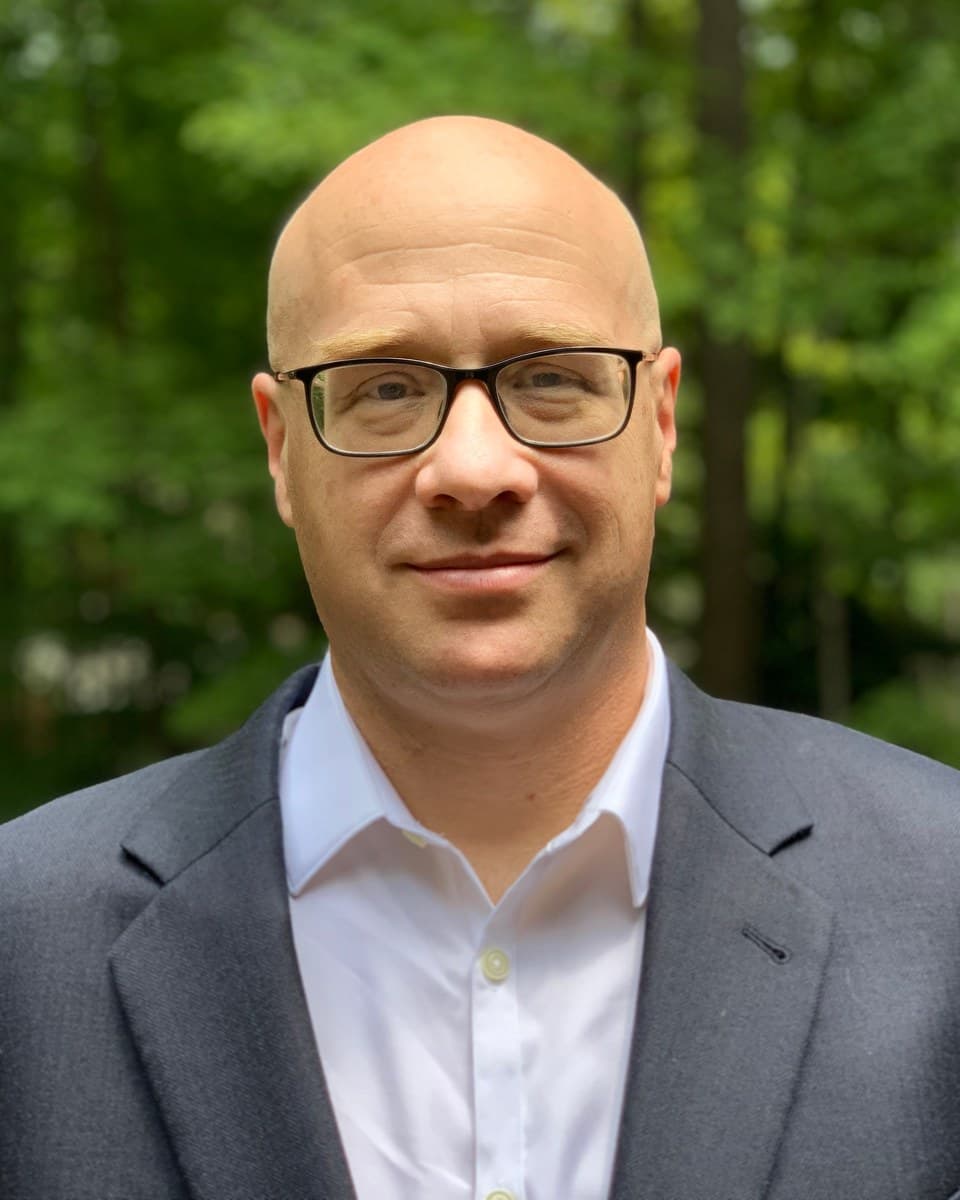
For fifteen years Scott was an Operations and Investment Executive at a privately held investment firm running a private-equity-style strategy in the lower middle market, where the portfolio grew from $10M to $180M in revenue. He led M&A and performance turnarounds across it, stepping in as CEO at underperforming businesses and repositioning them for growth, and sat on boards in the United States and internationally as owner representative.
His focus spanned healthcare, SaaS, compliance, and subscription models, often in sectors where trust, clarity, and operational rigor mattered most. He has driven operational initiatives across North America, Central America, Europe, and Asia, through distressed operations, international expansion, early-stage IP development, and go-to-market realignments.
He started in journalism, which left him with a sharp editorial eye and a deep appreciation for research and data. That curiosity led into technology: first as a systems integrator, then a developer, then into leadership as CIO and CEO in media and compliance-driven companies. He still writes the code: the AI systems in our proof section are ones he designed and built.
Along the way teams were built and leaders developed, many of whom have gone on to become CEOs of their own companies.
- Operating partner and CEO leadership
- M&A, integration, and performance turnarounds
- Company-wide AI enablement and training programs
- AI architecture and hands-on engineering
- Governed data access and MCP connector design

Emil Reister
Just outside Nashville, Tennessee
Emil has spent twenty years in sales and marketing, most of it inside a private equity portfolio his team jokingly called the island of misfit toys. If a business was badly broken, it ended up with them. That is where he learned the only version of this work that matters: diagnose what is truly wrong, then fix it with the people and the budget you already have, because there is never more of either.
He joined one of those businesses as a commission-only rep and left thirteen years later as its chief revenue officer, having taken a company that had never been profitable into sustained profitability. Along the way he built and led global teams of more than a hundred people across the United States, the Philippines, and India. He later rebuilt the outbound and retention motions of a healthcare SaaS business ahead of its sale.
The AI work is not a pivot. It is the same job with better tools. In market research, he and Scott launched an AI vertical as the company’s fifth revenue line, including an MCP integration that lets clients query reliable market research from inside Claude, Copilot, or their own BI stack. They built it early, when, in his words, “most people looked at me like ‘MC what’ when I said MCP.”
That is the argument for how we work. We did not read about this in a deck. We built it inside real companies, on a real budget, with people who were not technical when they started. That is exactly what we ask clients to do.
Emil has run a fractional practice since 2023, advising companies on sales and go-to-market motions and providing strategic leadership coaching. He is a builder and a puzzle solver, in that order. He is originally from South Africa.
- Go-to-market strategy and sales organization design
- Outbound, account management, and renewal motions
- Pricing, packaging, and segmentation
- RevOps consolidation and pipeline discipline
- AI-assisted commercial systems and MCP product delivery
- Fractional GTM advisory and leadership coaching
A few things worth knowing up front
We build our own tools
It keeps the advice honest. It’s hard to tell a management team what is realistic on an AI timeline if you haven’t shipped anything recently.
We build with your people, not for them
Your champions are in the work from the start, on your own systems. There is no handover at the end because there was never a wall in the middle.
We will tell you not to do it
Some processes should be fixed before they are automated, and some AI programs should not start until the business can execute a simpler change first.
We score before we start
The PDP Assessment sets the baseline across People, Data, and Process from evidence, in terms that map to the plan rather than to model usage or seat counts.
If you’re working on something that matters, we’ll make time
Even if it’s early, and even if it turns out we’re not the right people for it.